

This interesting episode in the long history of Roman-Parthian conflict found a Roman republican allied with the Parthians against Roman imperialists.
 The father of Quintus Atius Labienus was Titus Labienus, who had been Julius Caesar's most important general in the Gaul campaign. However, at the beginning of the civil war, Quintus' father broke with Caesar and joined forces with Pompey. Titus Labienus later died at the battle of Munda fighting Caesar's forces.
Quintus Labienus fought to restore the republic under Gaius Cassius Longinus. Cassius, who was among Caesar's assassins, had campaigned successfully against Pacorus I, and declared himself proconsul of Syria during the civil war that followed Caesar's death. However, it cannot be doubted that the Parthians were later actively supporting republican Romans instead of fighting them, for a Parthian contingent had come into Cassius' possession after he defeated Caecilius Bassus. Upon learning that Antony and Octavian were crossing the Adriatic to end Cassius' threat to Egypt, Cassius sent these Parthians to accompany a group of ambassadors to request additional Parthian support. Among the ambassadors was Quintus Labienus who apparently succeeded in his mission, for Parthians were counted among the defeated republican forces of Cassius and Brutus at the battle of Philippi (in Macedonia) against Octavian and Antony, 42 B.C.
Following his victory at Philippi, Antony went to Tarsus to consolidate his control in the east. From Tarsus, where Antony rendezvoused with Cleopatra in late summer of 41 B.C., Antony moved into Syria. There he appointed L. Decidius Saxa governor, and a Roman force was sent against Palmyra. The Palmyreans fled to Parthian territory where they influenced the Parthians to attack the Romans yet again. Joining the Palmyreans were the pro-Parthian petty rulers who had gained power following Crassus' defeat in 53 B.C. when Roman control was weak, and who now fled before Antony's advance to the protection of Parthia.
But when Antony moved southward to Alexandria, the Parthians again invaded Syria in the spring of 40 B.C., this time allied with Quintus Labienus. Labienus, knowing of the proscriptions following the battle at Philippi, had joined with the Parthians to fight imperial Roman forces. Under the joint command of Pacorus and Labienus, the Parthian army crossed the Euphrates and attacked Apamea. Though the assault failed, Roman garrisons around Syria rallied to Labienus, with whom they had fought under Brutus and Cassius. The combined army then defeated Saxa in a pitched battle where the Parthian cavalry's skill and larger numbers caused many troops of Saxa's quaestor (his brother) to desert to Labienus. Saxa, making a forced retreat at night to Antioch, lost most of his men also. Labienus and the Parthians then took Apamea without resistance. After defeating the Romans at Apamea, Pacorus turned south with a portion of the army and conquered the Levant from the Phoenician coast through Palestine. Labienus turned north to follow Saxa, then caught and killed him in Cilicia after taking Antioch. Labienus then proceeded to take all of Asia Minor, and the Parthian army added the legionary standards of Saxa to those of Crassus already housed in Parthian temples. With Labienus, the Parthians had in two years restored their territory to nearly the limits of the old Achaemenid empire and controlled all of Asia Minor except for a few cities.
In Judaea, Antigonus, a son of Aristobulus II, deposed his uncle John Hyrcanus II with Parthian assistance and proclaimed himself the newest (and last) Maccabean ruler. His victory was not complete, for Herod (also a son of Antipater) escaped to Rome where Antony and Octavian named him king of the Jews.
But the successes of Labienus and the Parthians were not long-lasting. Disagreement between Labienus and Pacorus weakened their combined effect. In 39 B.C., a Roman counterattack killed Labienus and recovered Asia Minor. One year later Pacorus was killed in Syria when he attacked a Roman camp that he had been led to believe was undefended. Herod personally led another Roman army to retake Jerusalem, capturing the holy city from the Parthian-supported Antigonus after a five-month siege.
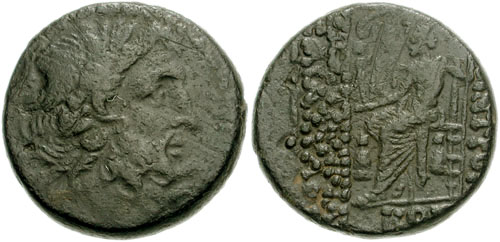
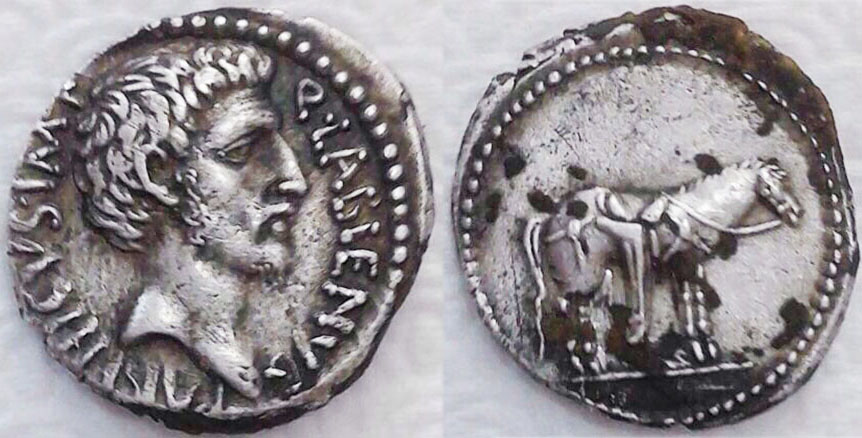
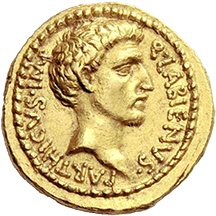
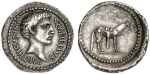
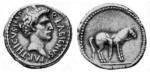
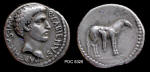
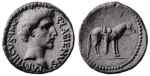
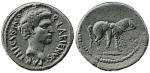
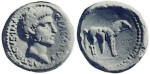
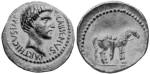
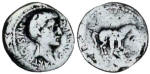
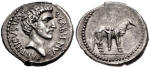
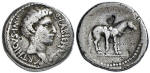
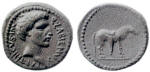
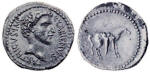
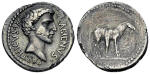
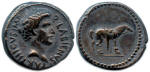
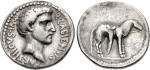
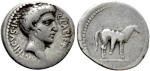
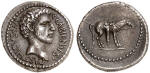
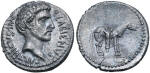
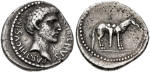
While allied with the Parthians, Labienus minted both silver and gold coins, but in only one type; they were probably used as a donative to Saxa's legions. Controversy exists on both the meaning of the obverse inscription and the riderless horse on the reverse. Was Labienus calling himself Imperator of the Parthians? Possibly the reverse design is an allusion to the missing, assassinated Julius Caesar, or maybe a tribute to the Parthian cavalry. Vagi [vol. I, p. 71] notes the engraving style of the aureus and denarius points to Antioch as the mint and late 40 B.C. as the date, and that some Antioch tetradrachms and bronzes can be ascribed to Labienus.
As of 1997, Sayles1 reported only four examples of the gold aureus; Harlan Berk2 published a photo of the fourth specimen in 2008. An auction3 in 2010 documented the fifth specimen. And finally, in 2023, a sixth specimen appeared at auction4.
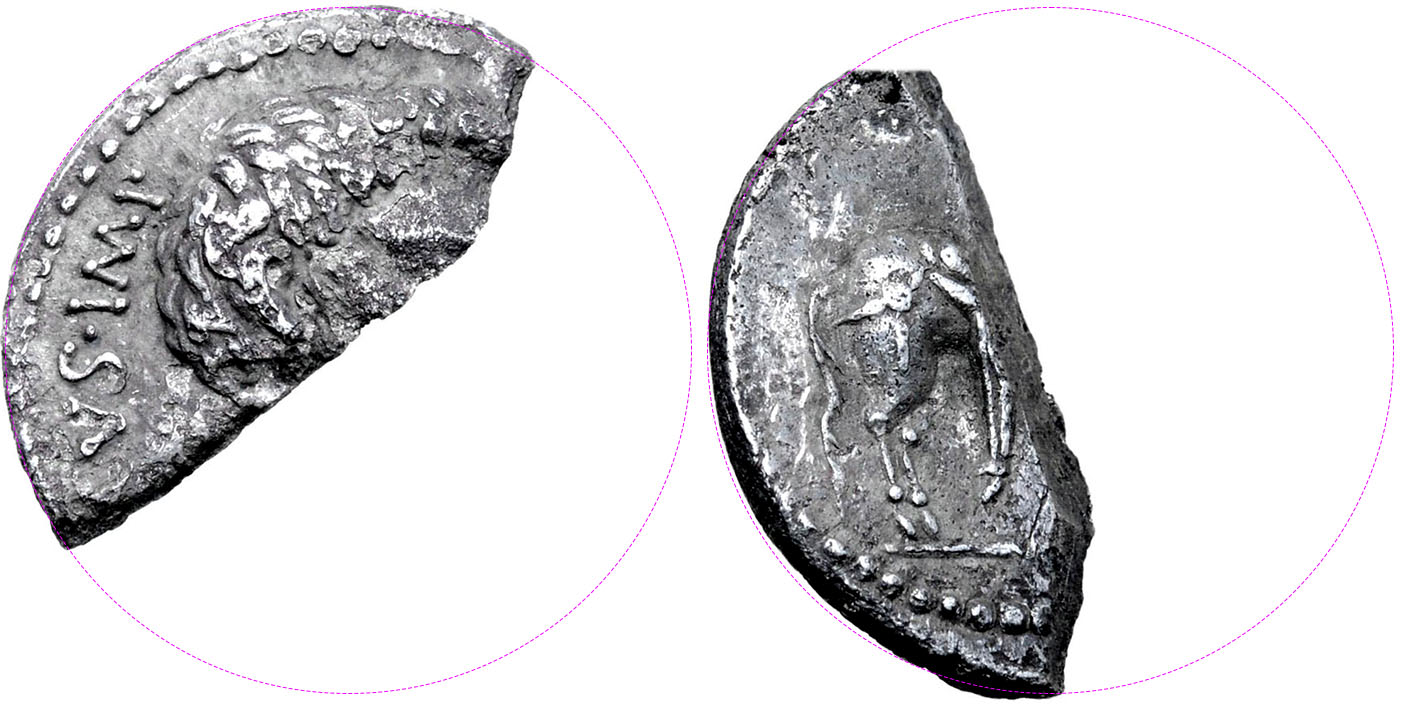
The silver coins are also rare but examples are more plentiful; Hersh recorded only 34 specimens of the denarius, struck from eight obverse and twenty reverse dies5. Since then research has increased the known examples. Below, 69 denarii are illustrated, including 32 of the 34 mentioned by Hirsch.
____________________
Notes:
1. Wayne G. Sayles, Ancient Coin Collecting III: The Roman World -- Politics and Propaganda
(1997), p. 182
2. Harlan J. Berk, 100 Greatest Ancient Coins (2008), p. 80
3. Numismatica Ars Classica, Auction 54 (24 Mar 2010), lot 279
4. The New York Sale, Auction 57 (10 Jan 2023), lot 145
5. C. A. Hersh, "The Coinage of Quintus Labienus Parthicus", SNR
59 (1980), p. 44
The coins of Labienus are rare; only six examples of the aureus are known; all are illustrated here. Images of the gold and silver coins on this page are serially indexed (e.g. G3 or S29) for identification in the Index field. Click on coin images to enlarge:
Aureus:Hersh, "The Coinage of Quintus Labienus Parthicus", SNR
59 (1980), records only three specimens of the aureus, struck
from two obverse dies (also used for denarius). He records three reverse dies
used only for aureus production. In addition to the three listed
by Hersh, three additional aureii are
illustrated below, two having the obverse and reverse dies of Hersh's Cat. AV 1,
and one with Cat. AV3. |
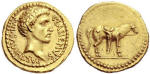 |
Q. Labienus AV Aureus 8.04g (PDC 79228) Mint: traveling with Labienus, undated (c. 40-39 B.C.) Obv: bare head of Labienus right with unruly hair and long sideburn; around, inscription = Q · LABIENVS · PARTHICVS · IMP; border of dots Rev: bridled and saddled horse standing to right on ground line; bow case and quiver attached to saddle Index: G1. Photo by Numismatica Ars Classica. An enlarged color photograph of the obverse of this rare gold coin graces the dust jacket of Sayle's Ancient Coin Collecting III, and a black and white enlargement of the reverse is found on page 182 - Alföldi, A. "Die Herrschaft der Reiterei, Gestalt und Geschichte", in Festschrift K. Schefold (1967), p. 18 and plate 9.9 - Babelon Atia 2 - Bahrfeldt 69 - Bank Leu 48 (10 May 1989), lot 299 (this coin) - Calicó 70 (this coin) same as Calicó 241 in Xavier Calicó, Los Aureos Romanos, 2002 ed. - Cohen 1 - Crawford 524/1 - Dieudonné, A., Revue numismatique (1899), plate III, 1 (same reverse die) - Ghey, Leins & Crawford (2010), 524.1.1 - Hersh, "The coinage of Quintus Labienus Parthicus", SNR 59 (1980), Cat. AV 3 (this coin) - Kent-Hirmer 101 incorrectly described as a denarius (this coin) - Martin Armstrong, Jr., "Monetary History of the World", (this coin) - Münzen und Medaillen AG Basel 43 (12 Nov 1970), lot 242 (this coin) - Numismatica Ars Classica 70 (16 May 2013), lot 192 (this coin) - Numismatic Fine Arts 25 (29 Nov 1990), lot 313 (this coin) - Sear Imperators 340 (this coin) - Sear RCV (2000), 1457 (this coin) - Sotheby’s Athena Fund II sale (26 Oct 1993), lot 91 (this coin) - Sydenham 1356 - Sayles, Wayne G. Ancient Coin Collecting III (1997), p.172, 182 (this coin) |
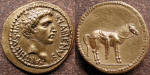 |
Q. Labienus AV Aureus 8.05g (PDC 6458) Mint: traveling with Labienus, undated (c. 40-39 B.C.) Index: G2 Current collection: Bibliothèque nationale, Paris, Atia 85, M2767 Photo by Chris Hopkins - Dieudonné, A. Revue numismatique (1899), plate III, 1 (this coin) - Hersh, "The coinage of Quintus Labienus Parthicus", SNR 59 (1980), Cat. AV 2 (this coin) |
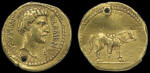 |
Q. Labienus AV Aureus 7.92g 6h (PDC 32636) Mint: traveling with Labienus, undated (c. 40-39 B.C.) Index: G3 Previous collection: Duke de Blacas Current collection: British Museum, 1867,0101.604 Photo by British Museum, Dept. of Coins and Medals, © Trustees of the British Museum - Hersh, "The coinage of Quintus Labienus Parthicus", SNR 59 (1980), Cat. AV 1 (this coin) - Greuber, Herbert A. (ed.), A Catalogue of Coins of the Roman Republic in the British Museum (1910), BMC II (East), p. 500, 131 (this coin) |
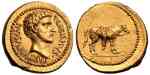 |
Q. Labienus AV Aureus 8.09g 20mm (PDC 60631) Mint: traveling with Labienus, undated (c. 40-39 B.C.) Index: G4 Photo by Karen Block - Berk, Harlan J., 100 Greatest Ancient Coins (Atlanta: Whitman, 2008), no. 40 (this coin) - Hersh, "The coinage of Quintus Labienus Parthicus", SNR 59 (1980), Cat. AV 1 (same dies) |
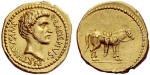 |
Q. Labienus AV Aureus 8.15g (PDC 60550) Mint: traveling with Labienus, undated (c. 40-39 B.C.) Index: G5 Photo by Numismatica Ars Classica - Numismatica Ars Classica 54 (24 Mar 2010), lot 279 (this coin) - Bahrfeldt 69 and pl. VII, 23 (same dies) - Berk, Harlan J., 100 Greatest Ancient Coins (2008), 40 (same dies) - Hersh, "The coinage of Quintus Labienus Parthicus", SNR 59 (1980), Cat. AV 1 (same dies) |
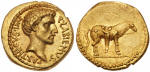 |
Q. Labienus AV Aureus 8.05g (PDC 124365) Mint: traveling with Labienus, undated (c. 40-39 B.C.) Index: G6 Previous collection: Tareq Hani Photo by Goldberg Coins & Collectibles - New York Sale 57 (10 Jan 2023), lot 145 (this coin) - Hersh, "The coinage of Quintus Labienus Parthicus", SNR 59 (1980), Cat. AV 3 (same dies) |
Denarius:Hersh records 34 specimens of the denarius, struck from eight
obverse and twenty reverse dies. So far, 69 denarii are
illustrated below including 32 of the 34
genuine denarii listed by Hersh plus an additional 37 found in trade. I hope readers with
photos of the two missing coins mentioned by Hersh but not
listed here will
contact me so I can add them
to this web page. |
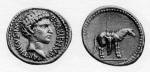 |
Q. Labienus AR Denarius 3.75g (PDC 2251) Mint: traveling with Labienus, undated (c. 40-39 B.C.) Index: S01 Obv: bare head of Labienus right with unruly hair and long sideburn; around, inscription = Q · LABIENVS · PARTHICVS · IMP; border of dots Rev: bridled and saddled horse standing to right on ground line; bow case and quiver attached to saddle Current collection: Vatican Museum Photo by Biblioteca Apostolica Vaticana - Alföldi, A. "Die Herrschaft der Reiterei, Gestalt und Geschichte", in Festschrift K. Schefold (1967), p. 18 and plate 9.10 - Babelon Atia 3 - BMCRR (East), p.500, 132 - Cohen 2 - Crawford 524/2 - FFC 1, Catálogo Monográfico de los Denarios de la República Romana - Ghey, Leins & Crawford (2010), 524.2.2 - Hersh, "The coinage of Quintus Labienus Parthicus", SNR 59 (1980), Cat. AR 12 (dies E/11) (this coin) - RBW 1809 - RSC 2 - Sear Imperators 341 - Sear RCV (2000), 1458 - Sydenham 1357 |
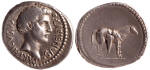 |
Q. Labienus AR Denarius 3.96g 19mm 6h (PDC 77016) Mint: traveling with Labienus, undated (c. 40-39 B.C.) Index: S02 Provenance: KHM old inventory Current collection: Kunsthistorisches Museum, Vienna, RO 856 Photo by Dr. Klaus Vondrovec (KHM) - 7000 anos de Arte Persa (2001), Fundacion "La Caixa", fig. 20c (this coin) - Ghey, Leins & Crawford (2010), 524.2.2 - Hersh, "The coinage of Quintus Labienus Parthicus", SNR 59 (1980), Cat. AR 4a (dies A/4) (this coin) |
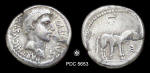 |
Q. Labienus AR Denarius 3.20g (PDC 5653) Mint: traveling with Labienus, undated (c. 40-39 B.C.) Struck BC 40 Index: S03 Photo by Classical Numismatic Group - CNG 55 (13 Sep 2000), lot 1109 (this coin) - Berk 125 (27 Feb 2002), lot 348 (this coin) - Gemini 10 (13 Jan 2013), lot 388 (this coin) - Roma Numismatics Auction 16 (26 Sep 2018), lot 641 (this coin) |
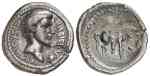 |
Q. Labienus AR Denarius 3.29g (PDC 52635) Mint: traveling with Labienus, undated (c. 40-39 B.C.) Index: S04 Photo by Gorny & Mosch Giessener Münzenhandlung - Gorny & Mosch 164 (17 Mar 2008), lot 353 (this coin) - Münzen & Medaillen GmbH 20 (10 Oct 2006), lot 272 (this coin) - Stack's (23 Apr 2009), Saint Ludovico and Firth of Clyde Collections, lot 1345 (this coin) |
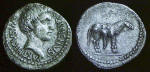 |
Q. Labienus AR Denarius 3.47g (PDC 4880) Mint: traveling with Labienus, undated (c. 40-39 B.C.) Index: S05 Photo by Numismatik Lanz München - Lanz 88 (23 Nov 1998), lot 819 (this coin) - Lanz 102 (28 May 2001), lot 439 (this coin) |
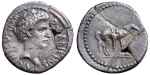 |
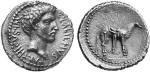
Q. Labienus AR Denarius 3.60g 19mm (PDC 58419) Mint: traveling with Labienus, undated (c. 40-39 B.C.) Index: S06 Photo by Andrew McCabe - Lanz, eBay (31 Jan 2009), item 270341992530 (this coin) - CNG E-Auction 432 (14 Nov 2018), lot 278 (this coin) |
 |
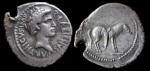
Q. Labienus AR Denarius 3.61g (PDC 16043) Mint: traveling with Labienus, undated (c. 40-39 B.C.) Index: S07 Current collection: Badian Collection, Rutgers University Libraries, BAD1240 Photo by Fritz Rudolf Künker Münzenhandlung - Künker 77 (30 Sep 2002), lot 326 (this coin) - CNG 63 (21 May 2003), lot 1200 (this coin) - CNG Online Coin Shop (Dec 2002), item 182290 (this coin) - Hersh, "The coinage of Quintus Labienus Parthicus", SNR 59 (1980), Cat. AR (obv. die F, unlisted reverse die) |
 |
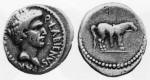
Q. Labienus AR Denarius 3.64g (PDC 6460) Mint: traveling with Labienus, undated (c. 40-39 B.C.) Index: S08 Current collection: Bibliothèque nationale, Paris, Ailly 4850 Photo by Chris Hopkins - Hersh, "The coinage of Quintus Labienus Parthicus", SNR 59 (1980), Cat. AR 1a (dies A/1) (this coin) |
 |
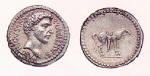
Q. Labienus AR Denarius 3.64g (PDC 32616) Mint: traveling with Labienus, undated (c. 40-39 B.C.) Index: S09 Current collection: Edgar L. Owen Previous collections: Vierordt; The Hunter Collection; Edgar L. Owen; R. Laughlin Photo by Bank Leu - Bank Leu & Münzen und Medaillen AG Basel (3 Dec 1965), lot 966 (this coin) - Goldberg 72 (3 Feb 2013), lot 4402 (this coin) - Hersh, "The coinage of Quintus Labienus Parthicus", SNR 59 (1980), Cat. AR 2b (dies A/2) (this coin) - A. Hess 221 Lucerne with H. Rosenberg (18 Dec 1933), lot 256 (this coin) - J. Schulman 139 (5 Mar 1923), Vierordt, lot 508 (this coin) - Münzen und Medaillen AG Basel 7 (3 Dec 1948), lot 513 (this coin) - Spink & Galerie des Monnaies (15 Feb 1977), lot 464 (this coin) - Triton 25 Session 5 Online (25 Jan 2022), lot 5340 (this coin) |
 |
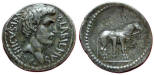
Q. Labienus AR Denarius 3.66g (PDC 5771) Mint: traveling with Labienus, undated (c. 40-39 B.C.) Index: S10 Photo from Monetary History of the World by Martin Armstrong, Jr. - Bank Leu 45 (26 May 1988), lot 302 (this coin) - Superior Stamp & Coin (13 Aug 1995), lot 692 (this coin) - Vagi, Coinage and History of the Roman Empire (1999), Vol. II, p. 204, no. 126 (this coin) |
 |
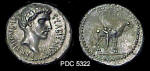
Q. Labienus AR Denarius 3.66g 12.34mm 6h (PDC 1098) Mint: traveling with Labienus, undated (c. 40-39 B.C.) Index: S11 Previous collection: Newell Current collection: American Numismatic Society, 1944.100.4820 Photo by Chris Hopkins - Hersh, "The coinage of Quintus Labienus Parthicus", SNR 59 (1980), Cat. AR 21 (dies G/18) (this coin) |
 |
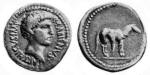
Q. Labienus AR Denarius 3.67g (PDC 5322) Mint: traveling with Labienus, undated (c. 40-39 B.C.) Index: S12 Photo by Harlan J. Berk, Ltd. - Berk 115 (2 Aug 2000), lot 371 (this coin) - Berk 117 (28 Nov 2000), lot 344 (this coin) |
 |
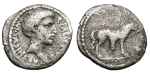
Q. Labienus AR Denarius 3.67g (PDC 32634) Mint: traveling with Labienus, undated (c. 40-39 B.C.) Index: S13 Previous collection: Bonazzi Current collection: Milan, 2242 Photo from G. G. Belloni, Le monete romane dell'età repubblicana, (Milan, 1960) - G. G. Belloni, Le monete romane dell'età repubblicana, Milan (1960), 2242 (this coin) - Hersh, "The coinage of Quintus Labienus Parthicus", SNR 59 (1980), Cat. AR 9a (dies C/9) (this coin) - Rodolfo Ratto, Bonazzi sale (23 Jan 1924), lot 1346 (this coin) - Riechmann 20 (18 Sep 1922), lot 385 (this coin) |
 |
Q. Labienus AR Denarius 3.67g (PDC 60309) Mint: traveling with Labienus, undated (c. 40-39 B.C.) Index: S14 Photo by Harlan J. Berk, Ltd. - Berk 167 (3 Dec 2009), lot 247 (this coin) |
 |
Q. Labienus AR Denarius 3.69g (PDC 60097) Mint: traveling with Labienus, undated (c. 40-39 B.C.) Index: S15 Photo by The New York Sale [Group 2] - New York Sale 23 (6 Jan 2010), lot 115 (this coin) - Künker 174 (27 Sep 2010), lot 592 (this coin) - Numismatica Ars Classica 39 (16 May 2007), cf. 91 (these dies) |
 |
Q. Labienus AR Denarius 3.73g (PDC 32635) Mint: traveling with Labienus, undated (c. 40-39 B.C.) Index: S16 Previous collection: Nicholas Photo by Bank Leu - Bank Leu 17, Nicholas (3 May 1977), lot 857 (this coin) - Hersh, "The coinage of Quintus Labienus Parthicus", SNR 59 (1980), Cat. AR 1e (dies A/1) (this coin) |
 |
Q. Labienus AR Denarius 3.73g 18mm 5h (PDC 52324) Mint: traveling with Labienus, undated (c. 40-39 B.C.) Index: S17 Provenance: 1882 Sandes Previous collection: Sandes Current collection: Staatliche Museen zu Berlin (Pergamonmuseum), 18202278 Photo from Interactive Catalogue of the Coin Cabinet, Staatliche Museen zu Berlin - Hersh, "The coinage of Quintus Labienus Parthicus", SNR 59 (1980), Cat. AR 2a (dies A/2) (this coin) |
 |
Q. Labienus AR Denarius 3.76g (PDC 5325) Mint: traveling with Labienus, undated (c. 40-39 B.C.) Index: S18 Current collection: Bibliothèque nationale, Paris, AF 2947 Photo by Chris Hopkins - Hersh, "The coinage of Quintus Labienus Parthicus", SNR 59 (1980), Cat. AR 17a (dies F/15) (this coin) |
 |
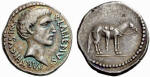
Q. Labienus AR Denarius 3.78g 18mm (PDC 60286) Mint: traveling with Labienus, undated (c. 40-39 B.C.) Index: S19 Previous collections: Robert Boyne; Dr. Nott Current collection: British Museum, 1843,0116.207 Ready electrotype reproductions of this coin: Tübingen University, III 63/(G3): (click to view) Stellenbosch University: (click to view) Photo from BMCRR East (1910) - S. Leigh Sotheby, Robert Boyne Sale (19 Jul 1843), lot 72 (this coin) - Greuber, Herbert A. (ed.), A Catalogue of Coins of the Roman Republic in the British Museum (1910), BMC II (East), p. 500, 132 (this coin) - Head, Barclay V. A guide to the principal gold and silver coins of the ancients, pl. 63, 30 (this coin) - Hersh, "The coinage of Quintus Labienus Parthicus", SNR 59 (1980), Cat. AR 15a (dies F/13) (this coin) - J. Warry, Die Kriegskunst der Griechen und Römer, 1981 (this coin) |
 |
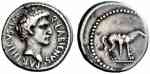
Q. Labienus AR Denarius 3.79g 19mm (PDC 43007) Mint: traveling with Labienus, undated (c. 40-39 B.C.) Index: S20 Provenance: ex Harlan J. Berk Previous collection: Barry Feirstein Photo by Numismatica Ars Classica - Numismatica Ars Classica 39 (16 May 2007), lot 91 (this coin) - Hersh, "The coinage of Quintus Labienus Parthicus", SNR 59 (1980), Cat. AR 15 - Numismatica Ars Classica 72 (16 May 2013), lot 555 (this coin) |
 |
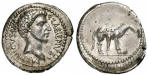
Q. Labienus AR Denarius 3.81g (PDC 52663) Mint: traveling with Labienus, undated (c. 40-39 B.C.) Index: S21 Previous collection: James Fox; Barry Feirstein; RBW; E. J. Haeberlin; De Quelen Photo by Numismatica Ars Classica - Numismatica Ars Classica 45 (2 Apr 2008), lot 51 (this coin) - Cahn 83 with Hess (17 Jul 1933), lot 2900 (this coin) - CNG 40 (4 Dec 1996), lot 1314 (this coin) - Hersh, "The coinage of Quintus Labienus Parthicus", SNR 59 (1980), Cat. AR 3b (dies A/3) (this coin) - Monetarium (Swiss Credit), list 51 (1989), lot 136a (this coin) - Numismatica Ars Classica 45 (2 Apr 2008), lot 51 (this coin) - Numismatica Ars Classica 63 (17 May 2012), lot 559 (this coin) - Numismatica Ars Classica 78 (26 May 2014), lot 516 (this coin) - Rollin & Feuardent (7 May 1888), de Quelen, lot 505 (this coin) |
 |
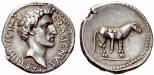
Q. Labienus AR Denarius 3.86g (PDC 60463) Mint: traveling with Labienus, undated (c. 40-39 B.C.) Index: S22 Provenance/ ex Harlan J. Berk private sale Photo by Gorny & Mosch Giessener Münzenhandlung - Gorny & Mosch 185 (8 Mar 2010), lot 229 (this coin) - Hersh, "The coinage of Quintus Labienus Parthicus", SNR 59 (1980), Cat. AR (dies B/20) |
 |
Q. Labienus AR Denarius 3.88g (PDC 60290) Mint: traveling with Labienus, undated (c. 40-39 B.C.) Index: S23 Previous collection: Magnaguti; Evans Photo by UBS AG Gold & Numismatics - UBS 78 (9 Sep 2008), lot 1181 (this coin) - Ars Classica 17 (3 Oct 1934), lot 1117 (this coin) - Hersh, "The coinage of Quintus Labienus Parthicus", SNR 59 (1980), Cat. AR 10 (dies D/9) - Numismatica Ars Classica 97 (12 Dec 2016), lot 56 (this coin) - P. & P. Santamaria, Rome (14 Oct 1949), lot 2348 (this coin) |
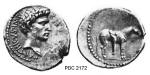 |
Q. Labienus AR Denarius 3.88g (PDC 2172) Mint: traveling with Labienus, undated (c. 40-39 B.C.) Index: S24 Photo by Münzen und Medaillen AG - Alföldi, A. "Die Herrschaft der Reiterei, Gestalt und Geschichte", in Festschrift K. Schefold (1967), p. 18 and plate 9.10 (same rev die) - Münzen und Medaillen AG Basel 43 (12 Nov 1970), lot 243 (this coin) - Numismatica Ars Classica 5 (25 Feb 1992), lot 390 (this coin) - Sternberg 1 (30 Nov 1973), lot 15 (this coin) - Hersh, "The coinage of Quintus Labienus Parthicus", SNR 59 (1980), Cat. AR 11b (dies E/10) (this coin) |
|
|
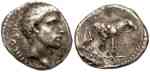
Q. Labienus AR Denarius 3.77g 18mm 5h (PDC 60630) Mint: traveling with Labienus, undated (c. 40-39 B.C.) Index: S25 Current collection: Staatliche Museen zu Berlin, 18204987 Photo from Interactive Catalogue of the Coin Cabinet, Staatliche Museen zu Berlin - Friedländer & von Sallet, Das Konigliche Munzkabinet (1877), 935 - Hersh, "The coinage of Quintus Labienus Parthicus", SNR 59 (1980), Cat. AR 3a (dies A/3) (this coin) |
 |
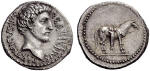
Q. Labienus AR Denarius 3.76g 17mm 11h (PDC 61250) Mint: traveling with Labienus, undated (c. 40-39 B.C.) Index: S26 Provenance: ex Stack's Photo by John Lavender - Coin Galleries (20 Oct 2010), lot 155 (this coin) |
 |
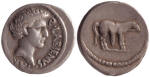
Q. Labienus AR Denarius 3.74g (PDC 66379) Mint: traveling with Labienus, undated (c. 40-39 B.C.) Index: S27 Previous collection: S.C. Markoff Photo by Numismatica Ars Classica - Numismatica Ars Classica 62 (5 Oct 2011), lot 2009 (this coin) - Goldberg 80 (3 Jun 2014), lot 3092 (this coin) |
 |
Q. Labienus AR Denarius 3.29g 18mm 4h (PDC 77017) Mint: traveling with Labienus, undated (c. 40-39 B.C.) Index: S28 Previous collection: Tiepolo Current collection: Kunsthistorisches Museum, Vienna, RO 857 Photo by Dr. Klaus Vondrovec (KHM) - Hersh, "The coinage of Quintus Labienus Parthicus", SNR 59 (1980), Cat. AR 8a (dies A/4) (this coin) |
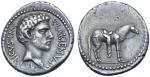 |
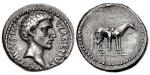
Q. Labienus AR Denarius 3.78g 18mm 5h (PDC 122780) Mint: traveling with Labienus, undated (c. 40-39 B.C.) Index: S29 Previous collection: Quadras y Ramon; Vogelberg Photo by Roma Numismatics - A. Banti. Corpus Nummorum Romanorum, Monetazione Repubblicana (Firenze, 1980-1982) (this coin) - S. Bourgey and G. Depeyrot, La République romaine: fonds Bourgey (1988), p. 199, 527 (this coin) - Bourgey Numismatique Auction (4 Nov 1913), Quadras y Ramon Sale, lot 707 (this coin) - Hersh, "The coinage of Quintus Labienus Parthicus", SNR 59 (1980), Cat. AR 11a (dies E/10) (this coin) - CNR 4 (this coin) - CRI 341 (this coin) - Roma Numismatics Auction 25 (21 Sep 2022), lot 797 (this coin) |
 |
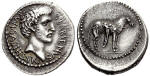
Q. Labienus AR Denarius 3.58g 19mm 5h (PDC 78273) Mint: traveling with Labienus, undated (c. 40-39 B.C.) Index: S30 Photo by Classical Numismatic Group - Triton 16 (7 Jan 2013), lot 928 (this coin) - Hersh, "The coinage of Quintus Labienus Parthicus", SNR 59 (1980), Cat. AR 16 (dies F/13) |
 |
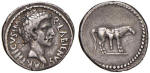
Q. Labienus AR Denarius 3.83g (PDC 79243) Mint: traveling with Labienus, undated (c. 40-39 B.C.) Index: S31 Photo by Numismatica Ars Classica - Numismatica Ars Classica 73 (18 Nov 2013), lot 258 (this coin) - Hauck & Aufhäuser (Nov 1985), lot 189 (this coin) - Hersh, "The coinage of Quintus Labienus Parthicus", SNR 59 (1980), Cat. AR (dies G/rev. unknown) |
 |
Q. Labienus AR Denarius 3.86g (PDC 106660) Mint: traveling with Labienus, undated (c. 40-39 B.C.) Index: S32 Photo by Nomisma spa - Nomisma Auction 58 (6 Nov 2018), lot 210 (this coin) - Naville 10 (15 Jun 1925), lot 1744 (this coin) |
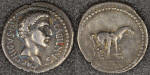 |
Q. Labienus AV Denarius 3.73g 18mm 5h (PDC 109241) Mint: traveling with Labienus, undated (c. 40-39 B.C.) Index: S33 Provenance: bequeathed by Dr William Hunter (1783) Previous collection: Dr William Hunter Current collection: Hunterian Museum, Glasgow, GLAHM:22689 Photo by Hunterian Museum, Glasgow - Hersh, The coinage of Quintus Labienus Parthicus, SNR 59 (1980), Cat. AR 6B, 6a (dies B/6) (this coin) |
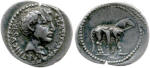 |
Q. Labienus AR Denarius 3.75g (PDC 82706) Mint: traveling with Labienus, undated (c. 40-39 B.C.) Index: S34 Provenance: Purchased from: Claude Scott Steuart Current collection: British Museum, 1841,0726.1208 Photo by British Museum, Dept. of Coins and Medals, © Trustees of the British Museum - Ghey, Leins & Crawford (2010), 524.2.2 (this coin) - Hersh, "The coinage of Quintus Labienus Parthicus", SNR 59 (1980), Cat. AR 16a (dies F/14) (this coin) |
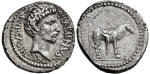 |
Q. Labienus AR Denarius 3.70g 18mm 6h (PDC 105881) Mint: traveling with Labienus, undated (c. 40-39 B.C.) Index: S35 Photo by Leu Numismatik AG - Leu Numismatik AG 2 (11 May 2018), lot 224 (this coin) - Hersh, "The coinage of Quintus Labienus Parthicus", SNR 59 (1980), Cat. AR 11 |
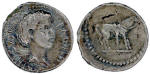 |
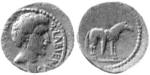
Q. Labienus AR Denarius (PDC 83854) Mint: traveling with Labienus, undated (c. 40-39 B.C.) Index: S36 Current collection: MAH Geneva, CdN 2001-1860 Photo Musée d’Art et d’Histoire de la Ville de Genève - Crawford 524/2 |
 |
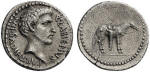
Q. Labienus AR Denarius (PDC 103723) Mint: traveling with Labienus, undated (c. 40-39 B.C.) Index: S37 Previous collection: Charles A Hersh; H. P. Hall; Prowe; Nordheim; Current collection: British Museum, 2002,0102.4827 Photo by Brüder Egger, Vienna - Brüder Egger Auktion 17 (28 Nov 1904), lot 2172 (this coin) - Ghey, Leins & Crawford (2010), 524.2.3 (this coin) - Glendining's 1950 Platt Hall part 1 (19 Jul 1950), lot 657 (this coin) - Hersh, "The coinage of Quintus Labienus Parthicus", SNR 59 (1980), Cat. AR 22a (dies G/19) (this coin) |
 |
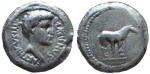
Q. Labienus AR Denarius 3.57g 18mm 5h (PDC 84089) Mint: traveling with Labienus, undated (c. 40-39 B.C.) Index: S38 Current collection: Deutsche Bundesbank Numismatic Library, Frankfurt am Main, 68854 Photo by Nomos AG - Nomos 9 (21 Oct 2014), lot 210 (this coin) - Hersh, "The coinage of Quintus Labienus Parthicus", SNR 59 (1980), Cat. AR 15 |
 |
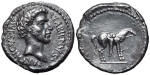
Q. Labienus AR Denarius (PDC 85039) Mint: traveling with Labienus, undated (c. 40-39 B.C.) Index: S39 Photo from Riccio Collection Catalogo (1855) - Riccio Collection 1855, plate 8 no 2 (this coin) |
 |
Q. Labienus AR Denarius 3.33g 18mm 5h (PDC 92797) Mint: traveling with Labienus, undated (c. 40-39 B.C.) Index: S40 Photo by Roma Numismatics - Roma Numismatics 11 (7 Apr 2016), lot 737 (this coin) - Hersh, "The coinage of Quintus Labienus Parthicus", SNR 59 (1980), Cat. AR 15 |
 |
Q. Labienus AR Denarius (PDC 99032) Mint: traveling with Labienus, undated (c. 40-39 B.C.) Index: S41 Previous collection: Franz Trau Photo by Adolph Hess, Frankfurt - Hess 228 with Gilhofer and Ranschburg, Franz Trau Coll. (22 May 1935), lot 39 (this coin) - Hersh, "The coinage of Quintus Labienus Parthicus", SNR 59 (1980), Cat. AR 1c (dies A/1) (this coin) |
 |
Q. Labienus AR Denarius (PDC 99210) Mint: traveling with Labienus, undated (c. 40-39 B.C.) Index: S42 Photo by Otto Helbing Nachf. (Munich) - Otto Helbing 37 (9 Apr 1913), lot 969 (this coin) - Brüder Egger Auktion 39 (15 Jan 1912), lot 612 (this coin) - Hersh, "The coinage of Quintus Labienus Parthicus", SNR 59 (1980), Cat. AR 19a (dies F/17) (this coin) |
 |
Q. Labienus AR Denarius 3.62g (PDC 103715) Mint: traveling with Labienus, undated (c. 40-39 B.C.) Index: S43 Photo by Harlan J. Berk, Ltd. - Berk 80 (18 Jan 1994), lot 354 (this coin) - Hersh, "The coinage of Quintus Labienus Parthicus", SNR 59 (1980), Cat. AR 7 |
 |
Q. Labienus AR Denarius 3.43g (PDC 103717) Mint: traveling with Labienus, undated (c. 40-39 B.C.) Index: S44 Photo by Harlan J. Berk, Ltd. - Berk 108 (12 May 1999), lot 293 (this coin) |
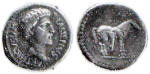 |
Q. Labienus AR Denarius (PDC 103718) Mint: traveling with Labienus, undated (c. 40-39 B.C.) Index: S45 Photo by Wayte Raymond - Wayte Raymond 29 (21 Mar 1939), lot 439 (or lot 438?) (this coin) - Hersh, "The coinage of Quintus Labienus Parthicus", SNR 59 (1980), Cat. AR 7a (dies C/7) (this coin) |
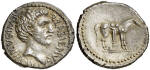 |
Q. Labienus AR Denarius 3.81g 5h (PDC 111127) Mint: traveling with Labienus, undated (c. 40-39 B.C.) Index: S46 Photo by Aureo & Calicó - Aureo & Calicó Subasta 339 (14 Nov 2019), lot 1075 (this coin) - FFC 1 (this coin) - NGC Certification 8808102-006 (this coin) - Superior Stamp & Coin 12 (8 Dec 1995), lot 871 (this coin) - Numismatica Genevensis 26 (16 Nov 2026), lot 191 (this coin) |
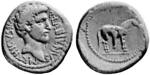 |
Q. Labienus AR Denarius 3.60g (PDC 103721) Mint: traveling with Labienus, undated (c. 40-39 B.C.) Index: S47 Previous collection: Consul Weber Photo by Jacob Hirsch (Munich) - Jacob Hirsch 24 (10 May 1909), lot 743 (this coin) - Glendining (2 Apr 1952), Ryan 1902 (this coin) - Hess (20 May 1912), lot 406 (this coin) - Hersh, "The coinage of Quintus Labienus Parthicus", SNR 59 (1980), Cat. AR 20a (dies G/17) (this coin) |
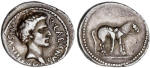 |
Q. Labienus AR Denarius (PDC 103722) Mint: traveling with Labienus, undated (c. 40-39 B.C.) Index: S48 Previous collection: H. C. Levis; Private Collection (Ticino); Sydenham; Fred Baldwin Photo by Soler y Llach - Naville 11 (18 Jun 1925), Levis lot 171 (this coin) - Glendining (24 Nov 1948), Sydenham 401 (this coin) - Glendining (20 Nov 1969), Baldwin 10 (this coin) - Hersh, "The coinage of Quintus Labienus Parthicus", SNR 59 (1980), Cat. AR 1b (dies A/1) (this coin) - Soler y Llach Auction 1122 (26 Oct 2021), lot 492 (this coin) |
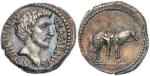 |
Q. Labienus AR Denarius 3.79g 18mm 5h (PDC 103793) Mint: traveling with Labienus, undated (c. 40-39 B.C.) Index: S49 Photo by Heritage Auction Galleries Additional photo of coin prior to cleaning - Heritage WCA 3061 New York (7 Jan 2018), lot 32083 (this coin) - Oslo Myntgalleri AS Auction 14 (12 May 2018), lot 855 (this coin) |
 |
Q. Labienus AR Denarius 3.80g 20mm 5h (PDC 109576) Mint: traveling with Labienus, undated (c. 40-39 B.C.) Index: S50 Photo by Classical Numismatic Group - Classical Numismatic Review Vol. 45, 2 (Winter 2020), item 520919 (this coin) - Heritage WCA 3075 Chicago (15 Aug 2019), lot 32043 (this coin) - Hersh, "The coinage of Quintus Labienus Parthicus", SNR 59 (1980), Cat. AR 21 (dies G/18) |
 |
Q. Labienus AR Denarius 3.67g (PDC 109499) Mint: traveling with Labienus, undated (c. 40-39 B.C.) Index: S51 Previous collection: Anne Demeester Photo by 51 Gallery (Bruxelles, Belgique) - 51 Gallery Auction (9 Dec 2013), lot 162 (this coin) - Leu 71 (24 Oct 1997), lot 270 (this coin) - Hersh, "The coinage of Quintus Labienus Parthicus", SNR 59 (1980), Cat. AR 14 (dies E/13) (this coin) |
 |
Q. Labienus AR Denarius 3.84g (PDC 109536) Mint: traveling with Labienus, undated (c. 40-39 B.C.) Index: S52 Previous collection: Private Collection G. Photo by Bank Leu & Hess AG, 1954-1971 - Hess-Leu 1 (14 Apr 1954), lot 220 (this coin) - Hersh, "The coinage of Quintus Labienus Parthicus", SNR 59 (1980), Cat. AR 18a (dies F/16) (this coin) |
 |
Q. Labienus AR Denarius 3.79g (PDC 109537) Mint: traveling with Labienus, undated (c. 40-39 B.C.) Index: S53 Photo by Numismatic Fine Arts - Numismatic Fine Arts 2 (25 Mar 1976), lot 362 (this coin) - Hersh, "The coinage of Quintus Labienus Parthicus", SNR 59 (1980), Cat. AR 6b (dies B/6) (this coin) |
 |
Q. Labienus AR Denarius 3.55g 18mm (PDC 111063) Mint: traveling with Labienus, undated (c. 40-39 B.C.) Index: S54 Photo by Auctiones GmbH - Auctiones GmbH eAuction 66 (15 Dec 2019), lot 255 (this coin) - Maison Palombo 19 (12 Dec 2020), lot 79 (this coin) - Maison Palombo 21 (28 Jan 2023), lot 74 (this coin) - Hersh, "The coinage of Quintus Labienus Parthicus", SNR 59 (1980), Cat. AR 5 |
 |
Q. Labienus AR Denarius 3.76g 18mm (PDC 111601) Mint: traveling with Labienus, undated (c. 40-39 B.C.) Index: S55. The Gotha collection was in a state of flux during WW2 and ended up in the western zone at close of the war. Before the reunification of Germany, officials refused to return artifacts to the eastern zone where Gotha is situated. In 1971, researcher Carl Berkowitz (then Graduate Fellow of the ANS) studied the collection when located in Munich. It subsequently found its way back to Gotha. Photo by Münzkabinett Gotha - Münzkabinett Gotha, Inv. 1.2./1811 (this coin) - Hersh, "The coinage of Quintus Labienus Parthicus", SNR 59 (1980), Cat. AR 3c (dies A/3) (this coin) |
 |
Q. Labienus AR Denarius 3.74g 18mm 5h (PDC 116585) Mint: traveling with Labienus, undated (c. 40-39 B.C.) Index: S56 Previous collection: Peter J. Merani Photo by Classical Numismatic Group - Berk BBS 153 (13 Mar 2007), lot 249 (this coin) - Triton 24 (19 Jan 2021), lot 57 (this coin) - Hersh, "The coinage of Quintus Labienus Parthicus", SNR 59 (1980), (obv die E/unknown rev die?) |
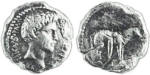 |
Q. Labienus AR Denarius 17mm (PDC 116634) Mint: traveling with Labienus, undated (c. 40-39 B.C.) Index: S57 Previous collection: National Museum of Naples Photo by International Association of Professional Numismatists - Catalogo del Museo Nazionale di Napoli, Medagliere, II, Monete Romane (Naples, 1870), not illustrated (this coin) - Coins Stolen from the National Archaeological Museum, Naples (IAPN 68 supplement, May 1977) (this coin) - Hersh, "The coinage of Quintus Labienus Parthicus", SNR 59 (1980), Cat. AR 13a (dies E/12) (this coin) |
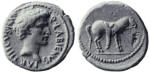 |
Q. Labienus AR Denarius (PDC 116637) Mint: traveling with Labienus, undated (c. 40-39 B.C.) Index: S58 Previous collection: Mazzini Photo from Mazzini, G. Monete Imperiale Romane (1957) - Mario Ratto Auction, Milan (23 May 1957?), lot ? (this coin) - Mazzini, G. Monete Imperiale Romane (Milano: Mario Ratto, ed), 1957-58, Labieno (this coin) - Hersh, "The coinage of Quintus Labienus Parthicus", SNR 59 (1980), Cat. AR 1d (dies A/1) (this coin) |
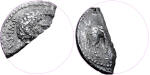 |
Q. Labienus AR Denarius fragment 1.56g 16mm 7h (PDC 117202) Mint: traveling with Labienus, undated (c. 40-39 B.C.) Index: S59 Photo by Roma Numismatics Additional image: study image with outlines - Roma Numismatics e-Sale 81 (25 Feb 2021), lot 1004 (this coin) - Hersh, "The coinage of Quintus Labienus Parthicus", SNR 59 (1980), Cat. AR 15 |
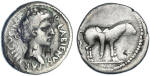 |
Q. Labienus AR Denarius 3.37g 18mm (PDC 117519) Mint: traveling with Labienus, undated (c. 40-39 B.C.) Index: S60 Photo by Jesús Vico S.A. - Jesús Vico 50th Anniversary Auction (14 Apr 2021), lot 424 (this coin) - Hersh, "The coinage of Quintus Labienus Parthicus", SNR 59 (1980) |
 |
Q. Labienus AR Denarius 3.67g 19mm (PDC 120277) Mint: traveling with Labienus, undated (c. 40-39 B.C.) Index: S61 Photo by Numismatik Naumann - Numismatik Naumann 111 (5 Dec 2021), lot 711 (this coin) - Tauler & Fau E-Auction 107 (30 Mar 2022), lot 1110 (this coin) - Roma Numismatics Auction 25 (21 Sep 2022), lot 929 - Triton 26 (10 Jan 2023), lot 634 (this coin) - Hersh, "The coinage of Quintus Labienus Parthicus", SNR 59 (1980) (dies F/20) |
 |
Q. Labienus AR Denarius 3.73g 18mm 5h (PDC 120500) Mint: traveling with Labienus, undated (c. 40-39 B.C.) Index: S62 Previous collection: Strauss Photo by Classical Numismatics Group - Hersh, "The coinage of Quintus Labienus Parthicus", SNR 59 (1980), Cat. 5a (dies B/5) (this coin) - Triton 25 (11 Jan 2022), lot 764 (this coin) |
 |
Q. Labienus AR Denarius 3.85g 19mm 5h (PDC 122778) Mint: traveling with Labienus, undated (c. 40-39 B.C.) Index: S63 Note: flan crack obv 12h Photo by Roma Numismatics - Roma Numismatics Auction 25 (24 Mar 2022), lot 928 (this coin) - Roma Numismatics Auction 28 (5 Jul 2023), lot 536 (this coin) - Heritage WCA 3113 (8 Jan 2024), lot 31047 (this coin) - Hersh, "The coinage of Quintus Labienus Parthicus", SNR 59 (1980), (dies F/?) |
 |
Q. Labienus AR Denarius 3.63g 18.5mm 5h (PDC 124229) Mint: traveling with Labienus, undated (c. 40-39 B.C.) Index: S64 Photo by Classical Numismatics Group - Triton 26 (10 Jan 2023), lot 635 (this coin) - Hersh, "The coinage of Quintus Labienus Parthicus", SNR 59 (1980), (dies F/15) |
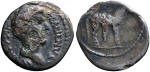 |
Q. Labienus AR Denarius 2.77g 17.8mm (PDC 126108) Mint: traveling with Labienus, undated (c. 40-39 B.C.) Index: S65 Photo by Netherlands National Numismatic Collection - Netherlands National Numismatic Collection, RO-00512 (this coin) - Hersh, "The coinage of Quintus Labienus Parthicus", SNR 59 (1980), (dies G/18 ??) |
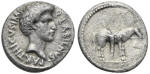 |
Q. Labienus AR Denarius 3.28g 16.45mm (PDC 127883) Mint: traveling with Labienus, undated (c. 40-39 B.C.) Index: S66 Photo by Astarte S.A. - Astarte Web Auction 1 (31 Jul 2023), lot 108 (this coin) - Aurora Heritage Web Auction 1 (12 Aug 2025), lot 192 - Hersh, "The coinage of Quintus Labienus Parthicus", SNR 59 (1980), (dies G/18) |
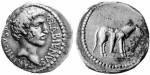 |
Q. Labienus AR Denarius 3.82g 18mm (PDC 127907) Mint: traveling with Labienus, undated (c. 40-39 B.C.) Index: S67 Photo by Museo Nazionale Romano (National Roman Museum) - Renzo Riva. "La monetazione di Quinto Labieno 'Parthicus Imperator'" Ass. Ital. Studi Filatelici Numismatici: Memorie dell'Accademia Italiana di Studi Filatelici e Numismatici. Vol. II, fascicolo 1e 2 (1982). (this coin) - Hersh, "The coinage of Quintus Labienus Parthicus", SNR 59 (1980), Cat. AR 23 (dies H/20) (this coin) |
 |
Q. Labienus AR Denarius 3.85g 17mm 5h. (PDC 133770) Mint: traveling with Labienus, undated (c. 40-39 B.C.) Index: S68 Photo by Leu Numismatik AG - Leu Numismatik AG 17 (31 May 2025), lot 389 (this coin) - Hersh, "The coinage of Quintus Labienus Parthicus", SNR 59 (1980), (dies F/15) |
 |
Q. Labienus AR Denarius 3.72g 19mm 6h. (PDC 134625) Mint: traveling with Labienus, undated (c. 40-39 B.C.) Index: S69 Photo by Leu Numismatik AG - Leu Numismatik AG 19 (18 Oct 2025), lot 134 (this coin) - Hersh, "The coinage of Quintus Labienus Parthicus", SNR 59 (1980), (dies F/?) |
|
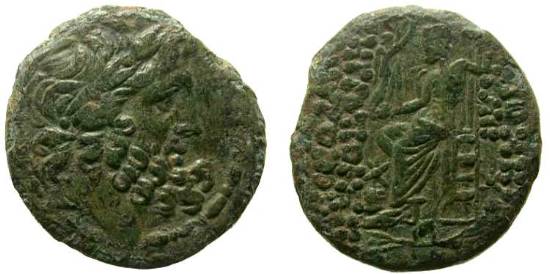 Quintus Labienus ? (42-39 B.C.) Quintus Labienus ? (42-39 B.C.)AE Tetradrachm, 11.69g, 25mm, die axis=2h Mint/ Antioch. Seleucid era 272 (c. 41-40 B.C.) Obv/ diademed head of Philip Philadelphos facing right, within a filleted border Rev/ Zeus seated left, holding Nike and scepter, with parts of the Greek legend ΒΑΣΙΛΕΟΣ ΦΙΛΙΠΠΟΥ ΕΠΙΦΑΝΟΥΣ ΦΙΛΑΔΕΛΦΟΥ; marks include two starred caps of the Dioscuri Current collection/ Bob Effler Photo/ by Jencek's Ancient Coins & Antiquities Note 1/ According to Butcher (page 316), the Dioscuri caps are associated specifically with the issue of 41/40 B.C. Note 2/ RPC 4225 refers to 4222, an inordinately heavy (15.37 grams) Caesarean year 8 issue, the high weight specific only to that year. Because this example has the same legend, but is of the lesser weight (11.69 grams), it must be catalogued as RPC 4225 Note 3/ The positions of the starred caps of the Dioscuri are important in dating this coin. Coins with the starred cap to the left of Zeus' throne slightly higher than the cap to the right are specific to the issue of Labienus and Pacorus (BMC 25, per Butcher), and dated to the Seleucid year 272 (41/40 B.C.). This distinction is made only in Butcher, a more detailed study of these bronzes (that was being researched and written at the time RPC I was published) with access to more current research on these coins Photo/ by permission - RPC I, 4225 |
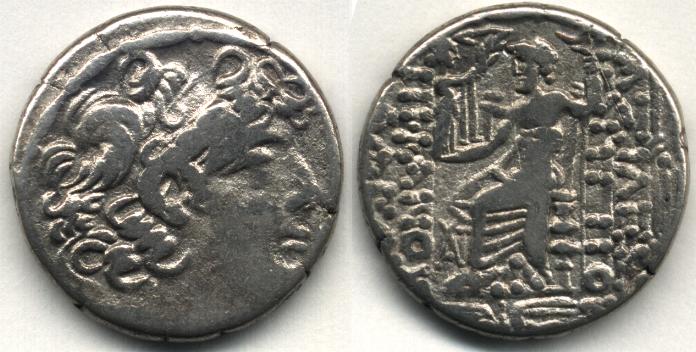 Quintus Labienus ? (42-39 B.C.) Quintus Labienus ? (42-39 B.C.)AR Tetradrachm Mint/ Antioch, Year 10 (c. 40-39 B.C.) Obv/ diademed head of Philip Philadelphos facing right, within a filleted border Rev/ Zeus seated left, holding Nike and scepter, with parts of the Greek legend ΒΑΣΙΛΕΟΣ ΦΙΛΙΠΠΟΥ ΕΠΙΦΑΝΟΥΣ ΦΙΛΑΔΕΛΦΟΥ. The date I appears in the exergue beneath Zeus, Year 10 of the Era of the Roman Province of Syria Note 1/ Labienus employed the same coin types as the last legitimate Syrian ruler, Philip I (Philip Philadelphos) Note 2/ These coins bear the city monogram of Antioch, indicating autonomy given to the city by Julius Caesar after Pharsalus, and Caesarean Era dates on coins minted from Year 3 (47-46 B.C.). The dates allow us to identify coins struck during Labienus' occupation of Antioch, 40-39 B.C. Photo/ by Praetorian Numismatics eBay Auction Oct 1999 - RPC I, 4133 |
If you have the sale catalog or know the location of photos for either of the following denarii mentioned by Hersh, please contact Chris Hopkins:
51 Gallery Auction (9 Dec 2013), lot 162 (denarius, 3.67g). Acquired from Anne Demeester, it sold for 2,800,00 euro.
Alföldi, A. "Die Herrschaft der Reiterei, Gestalt und Geschichte", in Festschrift K. Schefold, 1967, p. 18 and plate 9.9, (aureus), plate 9.10 (denarius).
Auctiones GmbH eAuction 66 (15 Dec 2019), lot 255, estimated at 20.000 CHF
Aureo & Calicó Subasta 339 (14 Nov 2019), lot 1075, sold for 110.000 EUR
Babelon, E. Description historique et chronologique des monnaies de la républic romaine (1885-1886), (Atia) B. 2 (aureus), B. 3 (denarius)
Bahrfeldt, M. von. Die Römische Goldmünzenprägung während der Republik und unter Augustus (1923), (who knew of only 3 examples, one each in the British Museum and Paris, and a third which was offered to the Berlin Museum in 1902), Bahrfeldt 69
Banti, A. Corpus Nummorum Romanorum, Monetazione Repubblicana (Firenze, 1980-1982)
Belloni, G. G. Le monete romane dell'età repubblicana (Milan, 1960), catalogue no. 2242 (3.67)
Bank Leu 17 (3-4 May 1977), Nicholas collection, lot 857, estimated at 30,000 Swiss Franc
Bank Leu 48 (10 May 1989), lot 299 (aureus, 8.04 g, G1) est. DM 8.500
Bank Leu/Münzen und Medaillen auction, Coll. Niggeler (3-4 Dec 1965), lot 966 (denarius, 3.64g)
Bourgey, S. and Depeyrot, G. La République romaine: fonds Bourgey (Paris, 1988), p. 199, 527
Harlan J. Berk, Auction #80 (12 May 1999), lot 293 (denarius, 3.43g)
Harlan J. Berk, Buy or Bid Sale #108 (18 Jan 1994), lot 354 (denarius, 3.62g)
Harlan J. Berk, Buy or Bid Sale #115 (2 Aug 2000), lot 371 and #117 (28 Nov 2000), lot 344 (denarius, 3.67g)
Harlan J. Berk, Buy or Bid Sale #125 (Jan 2002), lot 348 (denarius, 3.20g)
Harlan J. Berk Buy or Bid Sale #153 (13 Mar 2007), lot 249 (denarius, 7.34g)
Harlan J. Berk, 100 Greatest Ancient Coins (Atlanta: Whitman, 2008), p. 80, no. 40
Cahn/Hess, E. J. Haeberlin Collection (17 July 1933), lot 2900; estimated at 500 Reichs Mark (catalogue says 0.81 RM = 1 Swiss Franc at the time, so about 600 SFr)
Classical Numismatic Group No. 40 (4 Dec 1996), lot 1314. Estimate $10,000, sold for $8,000. Same coin as Monetarium (Swiss Credit), list 51 (1989), lot 136a; ex E.J. Haeberlin Collection (Cahn/Hess, 17 July 1933), lot 2900; ex De Quelen Collection (Rollin et Feuardent, 7 May 1888), lot 505.
Classical Numismatic Group No. 55 (Sep 2000), lot 1109 (denarius), estimated $7000
Classical Numismatic Group No. 63, lot 1200, estimated $25,000
Classical Numismatic Group, Online Coin Shop (Dec 2002), lot 182290 (denarius), list price $25,000
Classical Numismatic Review Vol. 45, 2 (Winter 2020), item 520919, list price $150,000
Classical Numismatic Group, Triton sale no. 24 (19 Jan 2021), lot 57; same coin as Harlan J. Berk Buy or Bid Sale #153 (13 Mar 2007), lot 249
Classical Numismatic Group, Triton sale no. 25 (11 Jan 2012, lot 764; same coin as Hersh, C. A. "The Coinage of Quintus Labienus Parthicus", SNR 59 (1980), Cat 5a
Classical Numismatic Group, Triton sale no. 26 (10 Jan 2013, lots 634 & 635 (drachms)
Cohen, Henry. Description historique des monnaies frappées sous l'Empire romain communément appelées médailles impériales, 2e edition (Leipzig, 1930), C. 1 (3,000.-), C. 2
Crawford, Michael H. Roman Republican coin hoards (1969), 524/2
Dieudonné, A. "Monnaies Romaines et Byzantines récemment acquise par le cabinet des médailles", Revue numismatique (1899), pp. 178f. and pl. 3, 1
Gorny & Mosch Auktion 164 (17 Mar 2008), lot 353, estimated at € 5,000
Greuber, Herbert A. (ed.) A Catalogue of Coins of the Roman Republic in the British Museum (1910), BMC II (East), p. 500, 131 (aureus), 132 (denarius)
Heritage Auction Galleries. Heritage WCA 3061 New York (7 Jan 2018), lot 32083 (denarius, 3.79g)
Heritage Auction Galleries. Heritage WCA 3075 Chicago (15 Aug 2019), lot 32043 (denarius, 3.80g)
Hersh, C. A. "The Coinage of Quintus Labienus Parthicus", SNR 59 (1980), p. 44-49. Records only 34 specimens of the denarius, struck from eight obverse and twenty reverse dies (includes Berlin examples)
A. Hess 221 Lucerne with H. Rosenberg (18 Dec 1933), lot 256
Jacob Hirsch Auction 24 (10 May 1909), lot 743 (denarius, 3.60g)
Fernández Molina, José; Fernández Carrera, Manuel; Calicó Estivill, Xavier. [FFC] Catálogo monográfico de los denarios de la República Romana (incluyendo Augusto) (2002), p.186, Labieno 1
Fritz Rudolf Künker Münzenhandlung Auction 77 (30 Sep 2002), lot 326, price realized EUR 16,000 plus fees
Fritz Rudolf Künker Münzenhandlung Auction 174 (27 Sep 2010), lot 450 (denarius, 3.68g, S15), est. price EUR 35,000
Lanz Numismatik Sale Catalogue No. 88 (23 Nov 1998) of the Leo Benz collection, lot 819 (denarius, 3.47g), estimated price DM 25,000, sale price DM 20,000 plus fees
Lanz Numismatik Sale Catalogue No. 102 (28 May 2001), lot 439 (same piece as Lanz 88, lot 819), estimated price DM 20,000.
Leu Sale Catalogue No. 45 (26 May 1988), lot 302 (denarius) realized SFr 28,500 (same piece as Superior 13, lot 692)
Leu Sale Catalogue No. 48, lot 299 realized SFr 270,000 plus fees
Leu Sale Catalogue No. 71, lot 270 realized SFr 5,400 plus fees
Maison Palombo 19 (12 Dec 2020), lot 79 (denarius, 3.55g), estimate 12.000 CHF
Monetarium (Swiss Credit), list 51 (1989), lot 136a
Münzen und Medaillen A.G. Public Sale Catalog No. 7, 1948, lot 513 (denarius, 3.64g)
Münzen und Medaillen A.G. Public Sale Catalog No. 43, 12-13 Nov 1970, lots 242 (aureus, 8.05g) and 243 (denarius, 3.88g) with monochrome pictures on plate 16. A color enlargement of the aureus is on plate 1. The estimated prices were SFr 90,000 and SFr 15,000 respectively, and realized SFr 75,000 and 17,000 plus fees. Lot 243 is the same coin as Sternberg 1 (1973), lot 15
Naville / Ars Classica XVII, 3 Oct 1934, lot 1117
The New York Sale 23, 7 Jan 2010, lot 115 (denarius, 3.69g, ) realized $43,125
Numismatica Ars Classica, 25 Feb 1992, lot 390 (denarius, 3.88g, S24)
Numismatica Ars Classica 39, 2007, lot 91 (denarius, 3.79g, S20)
Numismatica Ars Classica 45, 2 Apr 2008, lot 51 (denarius, 3,81g, S21)
Numismatica Ars Classica 54, 24 Mar 2010, lot 279 (aureus, 8.15g, G5)
Numismatica Ars Classica 70, 16 May 2013, lot 192 (aureus G1, 8.05)
Numismatic Fine Arts Catalog Sale XXV, lot 313 (aureus) realized US $150,000 plus fees
Numismatica Genevensis SA, Auction 26 16-17 November 2026, lot 191 (denarius, 3,82g)
Wayte Raymond Auction 29 (21 Mar 1939), lot 438 (not lot 439 as sometimes mentioned)
Rollin et Feuardent, De Quelen Collection (7 May 1888), lot 505
Roma Numismatics e-Sale 81 (25 Feb 2021), lot 1004
Sayles, Wayne G. Ancient Coin Collecting III: The Roman World -- Politics and Propaganda (1997), pp. 172, 182
Sear, David. The History and Coinage of the Roman Imperators (1998), p. 208, Cat 340/341
Sear, David. Roman Coins and their Values (2000 ed.), no. 1457 (aureus), no. 1458 (denarius)
J. Schulman (Amsterdam), Coll. Vierordt, 5 Mar 1923, lot 508 (denarius, 3.64g)
S. Leigh Sotheby, Robert Boyne Sale (19 Jul 1843), lot 72
Soler y Llach Auction 1122 (26 Oct 2021), lot 492 (denarius 3.80g). Sold for €35,500
Sotheby's auction of the Athena Fund II, 26 Oct 1993, lot #91 (aureus). It sold for 176,000 SF including buyer's premium. The coin had been purchased for the Athena fund at 270,000 Swiss francs (£ 126,000) in 1989. It was estimated by Sotheby's at a bargain SFR 100,000-150,000 (£ 47,000- £ 70,000) and sold for SFR 176,000 francs (£ 82,000)
Spink, Geneva & Galerie des Monnaies (15 Feb 1977), lot 464
Sternberg 1 (1973), lot 15. Estimated at Sfr. 20,000, sold Sfr. 35,000. This is the same coin as Münzen und Medaillen AG 43 (1970), 243
Superior No. 13, August 1995, The Jacobs collection, lot 692 which realized $32,000 plus fees (same piece as Leu 45, lot 302). A black and white enlargement is on plate XXII
Sydenham, Edward A. The Coinage of the Roman Republic (1952), S.1536 (aureus), S.1357 (denarius)
The New York Sale 57 (10 Jan 2023), lot 145 (aureus)
Vagi, David L. Coinage and History of the Roman Empire (1999), vol. I, p. 70-71; Vol. II, p. 204, nos. 125 (aureus), 126 (denarius), 127 (provincial AR tetradrachm), 128 (provincial bronzes).
This page last updated 10 Oct 2026











|

|

|